
JE Vaccine in Kerala Schools Should You Sign the Consent Form? 📝💉
- Prevent Japanese Encephalitis, a severe viral brain infection with no cure, by vaccinating your child.
- Trust the SA-14-14-2 vaccine, which is WHO pre-qualified and boasts an excellent long-term safety record.
- Expect mild side effects like a slight fever or injection site soreness as normal immune responses.
- Participate in school vaccination drives to ensure complete protection, even if children received previous doses.
- Culex mosquitoes transmit the deadly virus after breeding in stagnant water bodies like paddy fields.
Is the JE Vaccine Safe for Your Child? A Doctor’s Honest Opinion for Kerala Parents
It starts with a familiar scene. Your child comes home from school, drops their bag, and hands you a crumpled slip of paper.
“Amma/Appa, teacher asked you to sign this.”
You open it, and it’s a consent form for the Japanese Encephalitis (JE) vaccine.
Suddenly, a simple signature feels like a huge, heavy decision. You open your phone, and the class WhatsApp group is already exploding with messages.
- “Is this really needed?”
- “I heard it causes high fever!”
- “My neighbor said it’s not safe.”
- “Forwarded message: Dangerous side effects of new vaccines…”
- The vaccine has short expiry date!
Does this sound familiar?
If you are a parent in Kerala right now, you are likely caught in the middle of this JE vaccine drive in Kerala. On one hand, the government and schools are pushing for it. On the other hand, scary voice notes and unverified forwards are making you hesitate. You want to protect your child, but you are terrified of making the wrong choice.
“Is JE vaccine safe?” This is the question keeping many parents up at night.
Let’s take a deep breath and put the phone away for a moment. As a doctor, I want to help you cut through the noise. We are not going to rely on rumors; we are going to look at the medical facts. By the end of this article, you will have a clear, scientific answer on whether this vaccine is right for your child.
What Exactly Is Japanese Encephalitis?
Before we debate the vaccine, we need to understand the enemy it fights.
Japanese Encephalitis (JE) is not just a “fever.” It is a severe viral infection that directly attacks the brain. The word “Encephalitis” literally means inflammation of the brain.
It is transmitted by the bite of infected Culex mosquitoes. Unlike the mosquitoes that cause Dengue (which bite during the day and breed in fresh water), Culex mosquitoes breed in stagnant water bodies like paddy fields and wetlands. They typically bite between dusk and dawn.
Why Should Kerala Parents Be Worried?
You might think, “But my house is clean, and we don’t have stagnant water.”
Here is the catch: The virus is maintained in animals like pigs and water birds. In a state like Kerala, with its abundance of paddy cultivation, backwaters, and wetlands (especially in districts like Alappuzha and Thiruvananthapuram), the risk is always present.
The Scary Reality
Most people infected with JE will only have mild symptoms like a headache or fever. However, for a small percentage (about 1 in 250 infections), the virus crosses the blood-brain barrier.
Once it reaches the brain, the consequences are devastating:
- High Fatality: About 20-30% of patients who develop severe symptoms die.
- Permanent Disability: Among those who survive, 30-50% are left with permanent brain damage. This can include paralysis, recurrent seizures, inability to speak, or severe learning disabilities.
The Most Important Fact:
There is no specific cure for Japanese Encephalitis. Antibiotics don’t work. Antivirals don’t work. Doctors can only provide supportive care (managing fever and seizures) while the body fights the virus.
This is why prevention is not just an option; it is the only real protection we have.
The Big Question 🤔 Is JE Vaccine Safe?
This is the question that stops you from signing that consent form.
Let’s tackle the elephant in the room. You have heard rumors about children fainting or getting sick after the shot. Is there any truth to it?
The Vaccine Used in India
The vaccine primarily used in government immunization drives in India is the SA-14-14-2 live attenuated vaccine. It is not a new experiment.
- It has been used for decades across Asian countries.
- It is WHO pre-qualified, meaning it meets the highest international standards of safety and efficacy.
- Millions of doses have been administered to children in India over the last 15 years with an excellent safety record.
Understanding Side Effects
Like any medicine—from Paracetamol to antibiotics—vaccines can have side effects. But we must distinguish between “common reactions” and “danger signs.”
Common Side Effects (Normal):
- Mild Fever: Your child might get a slight temperature for 1-2 days. This is actually a good sign! It means their immune system is recognizing the vaccine and building a defense.
- Pain/Redness: There might be some soreness or redness at the injection site.
- Irritability: Younger children might be a bit cranky for a day.
Severe Side Effects (Extremely Rare):
Serious allergic reactions happen in less than 1 in a million cases. To put that in perspective, your child is statistically more likely to be harmed by a road accident on the way to school than by this vaccine.
The Verdict on JE Vaccine Safety for School Children
When we talk about JE vaccine safety for school children, the data is clear. The benefits heavily outweigh the risks.
Think of it this way:
- The Risk: A mild fever for one day.
- The Benefit: Lifetime protection against a disease that causes permanent brain damage, paralysis, or death.
As a doctor, if I had to choose between the risk of Japanese Encephalitis and the risk of the vaccine, I would choose the vaccine every single time. The temporary discomfort of a needle prick is a small price to pay for your child’s future safety.
Who Needs the Vaccine? (Babies vs. School Kids)
One of the biggest sources of confusion is the schedule. You might be thinking, “Did my child already get this when they were a baby? Do they need it again?”
Let’s break down how the JE vaccine drive in Kerala works.
1. Routine Immunization (The Standard Plan)
For years, the JE vaccine has been part of the routine immunization schedule in endemic districts of Kerala.
- JE Vaccine for Baby: If you look at your child’s vaccination card, you might see it listed.
- 1st Dose: Given at 9 months of age (usually along with the Measles-Rubella vaccine).
- 2nd Dose: Given at 16-24 months (along with the DPT booster).
2. Why the School Drive Now?
If it is already in the schedule, why are schools sending consent forms now?
The government conducts special “Catch-up Campaigns” for a few reasons:
- Missed Doses: Many children miss the second dose at 1.5 years of age.
- Waning Immunity: Immunity can decrease over time.
- Endemic Spikes: If health authorities detect an increase in the mosquito population or viral activity in a specific district, they launch a drive to ensure 100% coverage.
3. “My Child Already Took It. Should I Sign the Form?”
This is the most common doubt.
- If you are UNSURE: If you cannot find the vaccination card or don’t remember if your child got both doses, it is safer to take the vaccine in the school drive.
- If you are SURE: Even if your child has received the vaccine in the past, taking an additional dose during a campaign is generally considered safe and acts as a “booster” to their immunity. The JE vaccine safety for school children is well-established, even for those who have had previous doses.
However, if your child received a JE vaccine very recently (within the last few weeks), you should inform the school authorities or a doctor before proceeding.
Busting Common Myths & Fear Mongering
In the age of social media, misinformation travels faster than the virus itself. Let’s tackle the most dangerous rumors circulating in our WhatsApp family groups right now.
Myth 1: “JE is a rare disease, so my child doesn’t need it.”
Fact: You don’t see many JE cases today because of vaccination drives like this one. The virus is still very much present in our environment (in mosquitoes, pigs, and birds). If we stop vaccinating, the disease will come back with a vengeance.
Myth 2: “The vaccine causes severe reactions.”
Fact: As we discussed, serious adverse events are extremely rare (1 in a million). Most “reactions” are just the body’s natural immune response (mild fever), showing that the vaccine is working.
Myth 3: “They are dumping expired or short-expiry vaccines in Kozhikode and Malappuram.”
This is perhaps the most specific and damaging rumor floating around North Kerala. Let me be very clear: This is absolutely false.
The government supply chain (eVIN – Electronic Vaccine Intelligence Network) is strictly monitored. No expired vaccine can be administered to a child.
But how can you be sure? Trust the VVM.
Every vaccine vial comes with a smart sticker called the Vaccine Vial Monitor (VVM). It is a heat-sensitive label on the bottle.
- What to look for: A square inside a circle.
- The Rule: As long as the inner square is lighter in color than the outer circle, the vaccine is safe and potent.
- If the inner square becomes the same color or darker than the outer circle, the nurse will discard it immediately. This technology ensures that even if a vaccine has not reached its expiry date but was exposed to heat, it will not be used.
Your Right as a Parent:
If you are worried about the expiry date or the quality of the vaccine being given at school or the Anganwadi, you have the right to ask.
Politely ask the nurse or the health worker: “Can I please check the expiry date and the VVM on the vial?”
When Should You Wait or Say No? (Valid Medical Reasons)
While the vaccine is safe for the vast majority of children, there are specific medical situations where you should postpone vaccination or consult a specialist before proceeding.
1. High Fever on Vaccination Day
If your child has a high fever or a severe illness on the day of the vaccine drive, it is best to wait. Let them recover first.
- Important Note: A mild cold, runny nose, or a slight cough is NOT a reason to skip the vaccine. You can safely vaccinate a child with minor sniffles. But if they are bedridden or running a high temperature, ask the school authorities for a later date or visit the Primary Health Centre (PHC) once they are well.
2. History of Severe Allergic Reactions
If your child had a severe, life-threatening allergic reaction (anaphylaxis) to a previous dose of the Japanese Encephalitis vaccine, you should not give them the second dose.
- Note: This does not mean a bit of redness or swelling. We are talking about severe difficulty in breathing or shock, which is extremely rare.
3. Weakened Immune System
The JE vaccine used in these drives (SA-14-14-2) is a Live Attenuated Vaccine. This means it contains a weakened form of the virus.
Children with severely compromised immune systems should consult their treating specialist before taking it. This includes children who:
- Are undergoing chemotherapy or radiation for cancer.
- Are taking high doses of steroid medications.
- Have HIV/AIDS or other immunodeficiency disorders.
4. Recent Vaccination with Another Live Vaccine
If your child has received another live vaccine (like MMR or Chickenpox) within the last 4 weeks, you should mention this to the doctor. Usually, a gap of 4 weeks is recommended between two different live vaccines to ensure they both work effectively.
The Bottom Line:
If your child is healthy and active, there is no medical reason to avoid this vaccine. If you have any doubt regarding your child’s specific medical history, do not just sign “No” on the form based on fear. Get a professional opinion.
Still Confused? Don’t Rely on “WhatsApp University”
Even after reading all the facts, it is completely normal to still have a lingering doubt. Maybe your child has a specific history of seizures, a severe egg allergy, or is currently on some medication.
In these moments, where do you turn for advice?
Too often, we turn to the “Family Group” on WhatsApp or ask a neighbor. While they mean well, they are not medical experts. Basing your child’s health decisions on a forwarded voice note from an unknown source is a dangerous gamble.
Every Child Is Unique
While the vaccine is safe for the general population, your child is an individual. If you have a specific concern that wasn’t covered here, you don’t need to guess, and you certainly don’t need to panic. You just need a professional opinion.
The Easy Solution: Consult Pediatricians Online on Dofody
You don’t need to take a half-day leave from work or drag your child to a crowded hospital just to ask a question.
If you are holding that consent form and hesitating to sign it, do this instead:
- Download the Dofody App.
- Select a Pediatrician (Child Specialist).
- Start a Video or Audio call.
You can show the doctor your child’s previous vaccination card, explain your specific fears, and get a verified medical opinion in minutes. It is fast, affordable, and most importantly, it comes from a qualified doctor, not a social media influencer.
Get the right advice, right from your home.
Sign With Confidence
Let’s go back to that moment when your child handed you the consent slip.
It is easy to feel overwhelmed by the noise around us. The fear of “side effects” is immediate and visible. But the fear of the disease—Japanese Encephalitis—often feels distant, like something that only happens to “other people.”
But remember, diseases don’t discriminate. The mosquito doesn’t check if you are a careful parent or where you live.
Japanese Encephalitis is a disease with no cure. Once it strikes, modern medicine can only watch and support. The damage it does to a developing brain is often irreversible.
In contrast, the vaccine is a proven shield. It is a tool that has saved millions of children across Asia from a life of disability.
Your Decision Matters
As a parent, your primary job is to protect your child. Today, the best way to protect them isn’t by keeping them indoors or listening to fear-mongers; it is by giving their immune system the training it needs to fight this deadly virus.
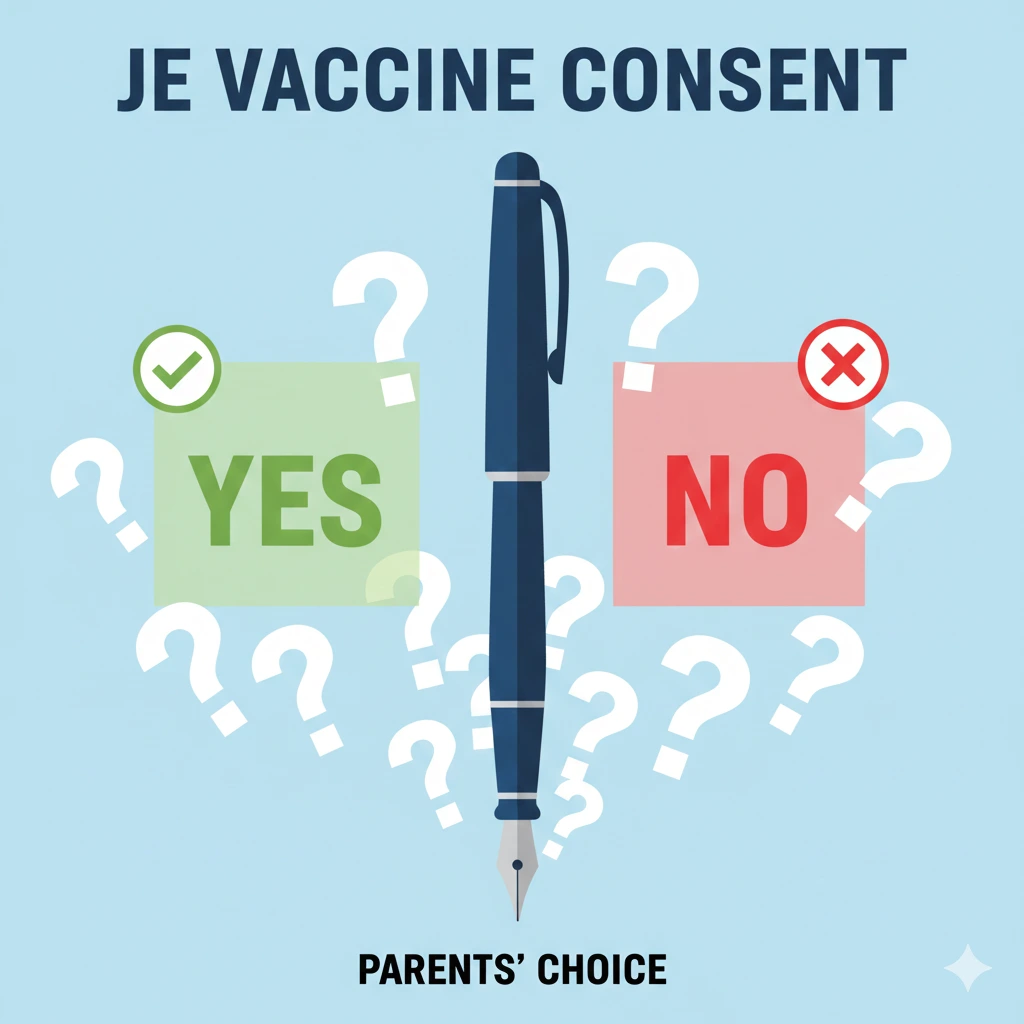
So, pick up that pen.
If your child is healthy and eligible, sign that consent form. Not with fear, but with the confidence that you are making the best, scientifically sound decision for your child’s future.
Don’t let a rumor be the reason your child loses their protection.
Stay Healthy, Stay Informed.
Dr. Prasoon
Chief Consultant, Dofody
Frequently asked questions
Japanese Encephalitis is a severe viral infection that causes inflammation of the brain. It is transmitted by infected Culex mosquitoes, which typically breed in stagnant water bodies like paddy fields and bite between dusk and dawn.
Yes, the SA-14-14-2 vaccine used in India is WHO pre-qualified and has an excellent safety record over the last 15 years. Severe allergic reactions are extremely rare, occurring in less than one in a million cases.
Your child may experience mild, normal side effects like a slight fever, irritability, or pain and redness at the injection site. These symptoms simply indicate that the immune system is recognizing the vaccine and building a defense.
The government conducts catch-up campaigns to cover missed doses, boost waning immunity, and address local spikes in mosquito populations. Taking an extra dose during these drives acts as a safe booster even if your child was previously vaccinated.
No, there is no specific cure for Japanese Encephalitis, and medications like antibiotics or antivirals do not work against it. Doctors can only provide supportive care for symptoms, making vaccination the only real protection.

Dr Prasoon C
You Might Also Like
Got Questions About Online Consultations? Call or WhatsApp
frequently asked questions
Yes. Every article on the Dofody blog is authored or reviewed by qualified doctors and healthcare professionals from our panel. We prioritize evidence-based medical insights and ensure the content is tailored to the specific health needs and cultural context of the Kerala community. However, this information is for educational purposes and should not replace a personal diagnosis.
If your symptoms persist for more than 48–72 hours, worsen despite home care, or if you experience “Red Flag” symptoms (such as high fever, severe pain, or sudden weakness), you should seek professional help immediately. You can book an online consultation on Dofody to discuss your specific symptoms with a specialist from the comfort of your home.
Absolutely. If this article has raised questions about your health, you can connect with a specialist (such as a General Physician, Pediatrician, or Gynecologist) the Dofody. Our doctors can provide personalized advice, review your medical history, and issue e-prescriptions or lab referrals based on your specific needs.