
What is HIV Phobia? Causes, Symptoms & How to Stop HIV Anxiety
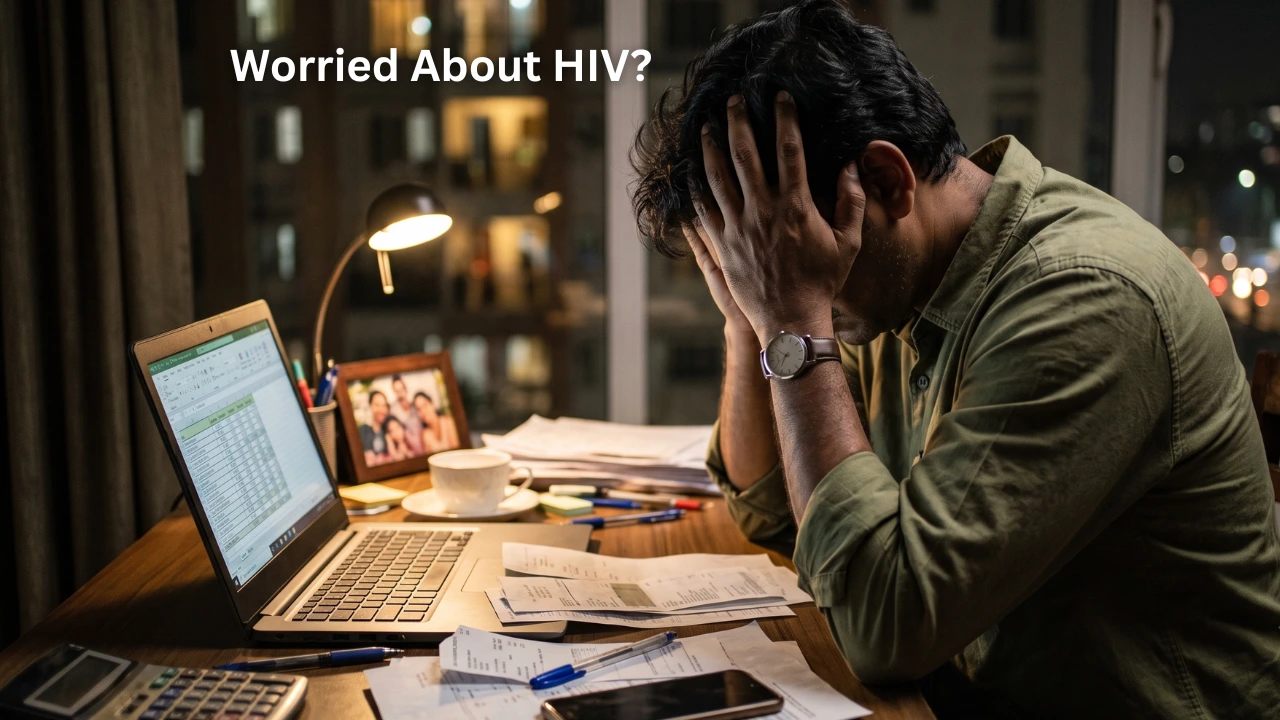
One of the most common things I see in my practice — and even in the comments on my videos — is this: someone had a potential exposure weeks or months ago, they’ve tested negative, and yet they cannot stop worrying that they have HIV. They Google every symptom. They re-test again and again. They avoid telling anyone. The fear has taken over their life, even though the medical picture is actually reassuring. This is HIV phobia, and it’s far more common than most people realize. In this post, I want to explain clearly what HIV phobia is, why it happens, how to tell it apart from a genuine medical concern, and — most importantly — what actually helps.
What Is HIV Phobia?
HIV phobia (also called HIV anxiety) is a persistent, excessive fear of having contracted HIV — even when medical evidence, including negative test results, strongly suggests otherwise. It’s not the same as normal worry after a high-risk exposure. Normal worry is rational: you had a risk, you get tested, the result is negative, and you move on. HIV phobia is when the fear doesn’t go away even after that negative result. In clinical terms, it often sits within the spectrum of health anxiety (hypochondria) or obsessive-compulsive disorder (OCD), where the mind becomes locked onto a feared catastrophe and can’t release it regardless of reassurance.
I want to be very clear about something: HIV phobia is a real psychological condition causing real suffering. It isn’t weakness or drama. And it is treatable. Learn More on Managing HIV fear in this Protocol designed with videos and practical tips!
Genuine HIV Risk vs. Irrational Fear — How to Tell the Difference
This is the first thing I try to work through with any patient who comes to me anxious about HIV. There’s an important distinction between two different situations.
When the concern is medically appropriate
A genuine concern about HIV exposure makes sense when:
- There was a real high-risk event — unprotected sex with a partner of unknown HIV status, sharing needles, or a needlestick injury — and you haven’t been tested yet.
- You’ve tested, but it was too early (inside the window period — the time between infection and when a test can reliably detect it, which is up to 45 days for a 4th-generation antigen/antibody test).
- You have symptoms that a doctor has specifically assessed and flagged for follow-up.
In these cases, the right response is straightforward: get the right test at the right time, and talk to a doctor. That’s it.
When the fear has crossed into phobia territory
HIV phobia is more likely when:
- You’ve had one or more negative tests taken after the window period, and you still don’t believe the result.
- The original exposure was actually low-risk or no-risk (kissing, touching, using a public toilet, mosquito bites — none of these transmit HIV), but the fear persists anyway.
- You find yourself checking your body constantly for symptoms, reading about HIV for hours each day, or avoiding relationships and medical care because you’re afraid of what you might find out.
- You’ve sought repeated reassurance from multiple doctors, and each reassurance only calms you for a short time before the anxiety returns.
- The fear is affecting your sleep, work, or relationships.
That last pattern — where reassurance provides only temporary relief and the fear always comes back — is the hallmark of health anxiety, not a genuine unresolved medical question.
Why Does HIV Phobia Happen?
Understanding the “why” genuinely helps people feel less alone with this, so let me walk through the most common reasons I see.
The fear of HIV specifically carries enormous cultural weight
HIV has decades of stigma and fear attached to it. Even people who intellectually know that HIV is a manageable chronic condition in 2024 — not the death sentence it once was — have absorbed messages that made it sound uniquely terrifying. That cultural freight makes HIV a very common focus for health anxiety, in the same way that cancer phobia or heart disease phobia can develop.
Guilt and shame amplify the fear
Many of my patients who develop HIV phobia feel ashamed of the circumstances they’re worried about. That shame gets fused with the fear, making it much harder to think clearly or seek help. The anxiety isn’t just “do I have this disease” — it becomes “if I have this, what does that say about me, and what will happen to my life.” That extra emotional weight is exhausting to carry.
The internet makes everything worse
I say this gently, but I say it firmly: Google is a terrible doctor for someone with health anxiety. When you search your symptoms while already anxious, you will find the worst-case interpretation. Every sore throat becomes a sign. Every fatigue becomes a symptom. The more you search, the more material your anxious mind has to work with. This is a known, well-documented cycle — searching for reassurance online actually increases health anxiety over time rather than resolving it.
A genuine past exposure that was never properly processed
Sometimes the phobia started with a real event — a real risk, a real moment of panic — and even though the medical outcome was fine, the psychological shock was never addressed. The test came back negative but the fear got “stuck.” This is particularly common in people who didn’t have access to a calm, thorough medical conversation at the time and were left to process it alone.
Watch: HIV Facts vs. Myths — Dr. Prasoon Explains
I covered HIV facts and myths in detail in this video — including what’s actually a risk and what isn’t — which is directly relevant if you’re trying to reality-check whether your specific concern is medically grounded:
This video was recorded in Malayalam — if an English audio track is available, you can switch to it from the YouTube player’s settings (gear) icon → Audio track → English.
And if you’ve been in a situation where anxiety followed what felt like a risky encounter, this video addresses that exact experience honestly:
This video was recorded in Malayalam — if an English audio track is available, you can switch to it from the YouTube player’s settings (gear) icon → Audio track → English.
What HIV Anxiety Actually Feels Like — The Symptoms
HIV anxiety can produce physical symptoms that feel completely real — and this is one of the cruelest parts of health anxiety in general. Anxiety itself causes fatigue, swollen feelings in the throat, night sweats, weight fluctuation, and skin changes. So the person with HIV phobia notices these symptoms, assumes they’re proof of infection, becomes more anxious, and the physical symptoms intensify. It becomes a self-reinforcing loop.
Knowing that anxiety produces real physical symptoms isn’t dismissing what you feel. It’s actually crucial medical information — because it means those symptoms are not proof of HIV, they may be proof of how much distress you’re carrying right now.
I go deeper into how anxiety manifests physically in this video:
This video was recorded in Malayalam — if an English audio track is available, you can switch to it from the YouTube player’s settings (gear) icon → Audio track → English.
The Reassurance Trap — Why Getting Another Test Often Makes Things Worse
I need to say something that might sound counterintuitive: if you’re in true HIV phobia territory, getting another HIV test is usually not the solution. I’m not saying don’t test — if you genuinely haven’t tested properly after the window period, please do. But if you’ve already had multiple negative results after the window period and you’re considering testing again purely to calm the anxiety, that extra test is unlikely to help long-term.
Here’s why: health anxiety works by turning reassurance into a temporary fix. The relief lasts a few days, then the fear finds a new angle — “but what if the test was wrong,” “but what if I’m in the window period still” — and you need another reassurance. This is the reassurance cycle, and each loop through it actually reinforces the anxiety rather than resolving it. The brain learns that seeking reassurance is how you manage fear, which makes the fear come back faster next time.
Breaking this cycle requires addressing the anxiety itself, not the HIV question.
Dr. Prasoon’s Note: This doesn’t mean your fear isn’t real or that your symptoms aren’t real. It means the medical question has been answered, and the remaining suffering is a psychological one — which is entirely valid, and which has effective treatments. The distinction matters because the path forward is different. A tenth HIV test won’t do what one good therapy session might.
How to Actually Overcome HIV Phobia
Step 1: Get medically cleared properly — once
If you haven’t done this yet, do it now. A 4th-generation HIV test (antigen/antibody combination test) taken 45 days or more after the last possible exposure is considered conclusive. Talk to a doctor who will actually explain your result and your risk level clearly — not just hand you a printout. If you need that conversation with an experienced doctor online, you can consult a doctor on Dofody from wherever you are.
Step 2: Stop Googling symptoms
I know this is hard. But this is non-negotiable if you want to get better. Set a rule: no searching HIV symptoms, no reading HIV forums, no looking up your symptoms. Not because the information isn’t out there — it is — but because your anxious mind will not use that information neutrally. Every search feeds the loop.
Step 3: Address the anxiety itself, not just the HIV question
Cognitive Behavioural Therapy (CBT) — a structured talking therapy that helps you identify and change the thought patterns maintaining anxiety — has strong evidence behind it for health anxiety and OCD-spectrum concerns. This is the main treatment I’d point people toward. In some cases, a doctor may discuss whether medication is appropriate alongside therapy.
If anxiety is significantly affecting your daily life, please don’t white-knuckle it alone. Speaking to a clinical psychologist or psychiatrist makes a real difference. You can book a consultation with Dr. Albin Eldhose, a clinical psychologist available via video call through Dofody (consultation fee: Rs 2499).
Step 4: Understand the difference between stress and anxiety — and treat accordingly
A lot of people use these words interchangeably, but they’re clinically different, and that difference matters for what helps. Stress is typically a response to an external pressure. Anxiety is a state where the alarm system in your brain keeps firing even when the external pressure is gone or never existed. HIV phobia is anxiety, not stress — and the tools that help are different.
This video was recorded in Malayalam — if an English audio track is available, you can switch to it from the YouTube player’s settings (gear) icon → Audio track → English.
Step 5: Support your nervous system while you work through this
This isn’t a replacement for therapy, but it’s a genuine complement to it. Anxiety has a physiological component — chronic anxiety keeps your nervous system in a heightened state. Good sleep, regular movement, and reducing stimulants genuinely help regulate that baseline. Some people find specific supplements supportive during this period; I’ve covered the evidence for anxiety-relevant supplements in this video:
This video was recorded in Malayalam — if an English audio track is available, you can switch to it from the YouTube player’s settings (gear) icon → Audio track → English.
One supplement I do think is worth mentioning in this context is magnesium — specifically in a well-absorbed form. Magnesium deficiency is very common and is linked to poor sleep and heightened anxiety response. Our Premium Magnesium Bisglycinate (Rs 499, currently 69% off) uses the bisglycinate form, which is gentle on digestion and well-absorbed. It’s not a treatment for HIV phobia — but supporting your sleep and nervous system baseline while you do the real work of addressing the anxiety is a sensible thing to do.
A Plain Summary — What to Do
- If you haven’t been properly tested: Get a 4th-generation HIV test 45 days or more after your last exposure. Talk to a real doctor about your result.
- If you’ve tested negative after the window period: Medically, that’s your answer. The remaining fear is anxiety, and anxiety is treatable.
- Stop the reassurance loop: No more Googling, no repeat testing done purely for anxiety relief.
- Get proper support: A clinical psychologist experienced in health anxiety or OCD is the right next step if the fear is affecting your life. You don’t have to manage this alone.
- Be kind to yourself: HIV phobia is common, it’s not a character flaw, and it gets better with the right help.
Frequently Asked Questions
What is HIV phobia exactly?
HIV phobia (also called HIV anxiety) is a persistent, irrational fear of having HIV — even when tests are negative and risk was low or absent. It’s a form of health anxiety where the mind stays locked on the fear of HIV despite evidence to the contrary. It’s a recognized psychological condition and it’s treatable.
Can HIV phobia cause physical symptoms?
Yes — and this is one of the most confusing parts of the condition. Anxiety itself produces real physical symptoms: fatigue, swollen glands, night sweats, skin changes, sore throat. These are symptoms of anxiety, not proof of HIV infection. Recognizing this is an important part of breaking the fear cycle.
How many times should I test for HIV to be sure?
A 4th-generation antigen/antibody HIV test taken 45 days or more after the last possible exposure is considered conclusive by current guidelines. One properly timed, properly conducted test is enough. If you’re considering a repeat test purely because you don’t believe a negative result, that’s a sign the issue is anxiety — not an unresolved medical question. Please speak to a doctor about what you’re experiencing.
Is HIV phobia the same as OCD?
Not exactly — but they overlap significantly. HIV phobia often shares the core mechanism of OCD: an intrusive feared thought, compulsive behaviors (repeated testing, Googling, seeking reassurance) done to reduce anxiety, and temporary relief that wears off quickly. Some people with HIV phobia have an underlying OCD-spectrum condition; others have generalized health anxiety. A clinical psychologist can help identify which pattern fits and what works best.
Where can I get help for HIV anxiety in Kerala?
You can speak to a doctor online without having to travel or explain yourself to a receptionist in a waiting room. For psychological support, Dr. Albin Eldhose, clinical psychologist, is available via video call on Dofody. If you first want a medical consultation to make sure your testing situation is properly reviewed, you can find the right specialist through Dofody’s doctor consultation page.

Dr Prasoon C
You Might Also Like
Got Questions About Online Consultations? Call or WhatsApp
frequently asked questions
Yes. Every article on the Dofody blog is authored or reviewed by qualified doctors and healthcare professionals from our panel. We prioritize evidence-based medical insights and ensure the content is tailored to the specific health needs and cultural context of the Kerala community. However, this information is for educational purposes and should not replace a personal diagnosis.
If your symptoms persist for more than 48–72 hours, worsen despite home care, or if you experience “Red Flag” symptoms (such as high fever, severe pain, or sudden weakness), you should seek professional help immediately. You can book an online consultation on Dofody to discuss your specific symptoms with a specialist from the comfort of your home.
Absolutely. If this article has raised questions about your health, you can connect with a specialist (such as a General Physician, Pediatrician, or Gynecologist) the Dofody. Our doctors can provide personalized advice, review your medical history, and issue e-prescriptions or lab referrals based on your specific needs.