
Consult a Pediatrician Online When It’s Safe & When to Go to Casualty
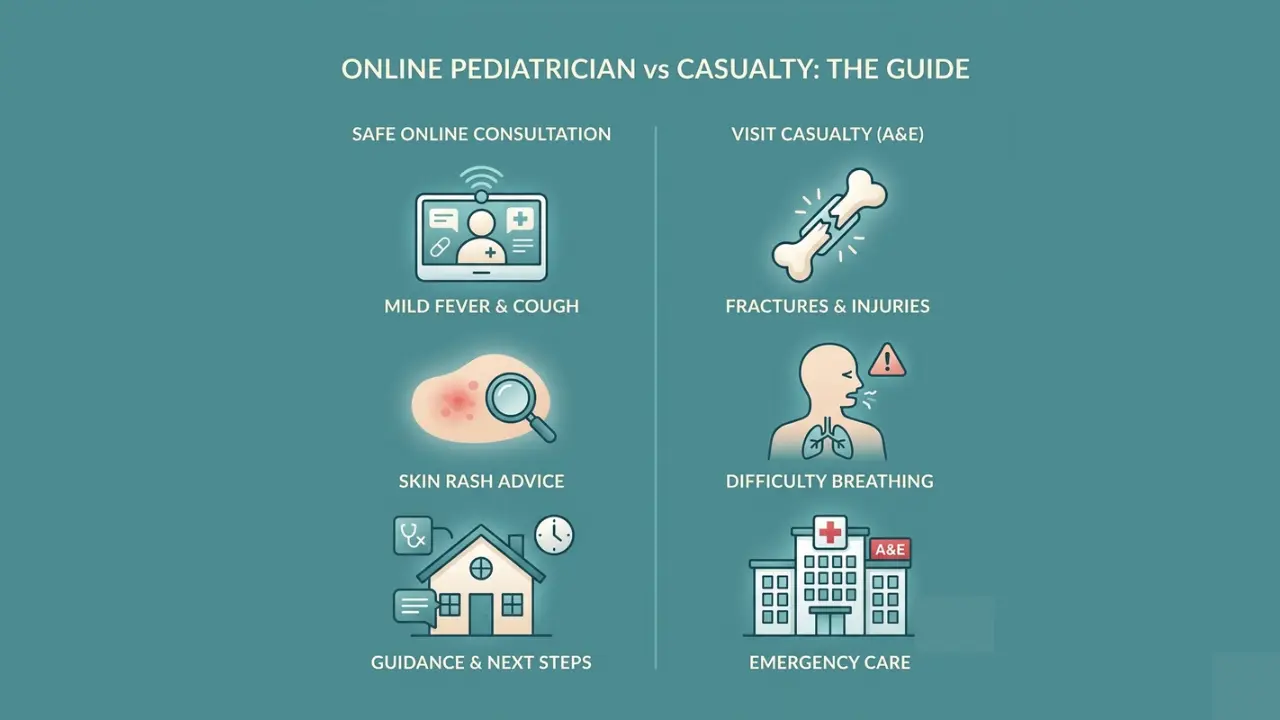
- Consult pediatricians online for non-emergency issues like skin rashes, mild allergies, feeding difficulties, and developmental milestone tracking.
- Seek immediate hospital care for red flags like respiratory distress, severe lethargy, severe dehydration, or high fever in newborns.
- Prepare for virtual visits by recording accurate weight, measuring temperature, listing current medications, and taking clear photos.
- Trust your parental intuition unconditionally; if your child appears seriously unwell, bypass telemedicine and visit casualty immediately.
- Telemedicine protects sick children from exposure to hospital infections while providing rapid access to experienced pediatric specialists from home.
One of the most frequent situations I encounter in clinical practice involves exhausted, anxious parents facing a sudden health question late in the evening. Your toddler develops an unexplained rash after dinner, your newborn has been crying inconsolably with suspected colic for three hours, or you need clarity on a routine vaccination schedule. Dragging a sick, distressed child into a crowded hospital waiting room—where they are exposed to dozens of active infections—is often the last thing any parent wants to do.
Being able to consult a pediatrician online bridges this critical gap. Telemedicine allows parents to connect directly with an experienced child specialist from the quiet comfort of their living room. However, safe virtual child care relies on knowing its boundaries: understanding exactly which childhood conditions can be safely assessed through audio or video, and recognizing the non-negotiable emergency red flags that require immediate in-person hospital care.
Which Childhood Conditions Can You Safely Address Online?
While an online consultation cannot replace hands-on palpation of an acute abdomen or listening to chest sounds with a physical stethoscope, pediatricians can safely evaluate, diagnose, and guide management for a wide variety of everyday childhood health concerns.
1. Skin Rashes, Diaper Dermatitis, and Eczema Flares
High-resolution smartphone cameras have made pediatric dermatology one of telemedicine’s most effective areas. Whether it is cradle cap, heat rash, mild hives, or recurrent eczema, a clear visual evaluation paired with a detailed history often gives a pediatrician enough diagnostic clarity to suggest safe, soothing topicals and lifestyle modifications.
2. Infant Feeding Difficulties, Reflux, and Colic
New parents constantly worry about whether their baby is getting enough milk, spitting up too frequently, or suffering from painful gas. A virtual visit allows the pediatrician to observe feeding posture, review diaper output counts, assess growth patterns, and offer practical, reassuring feeding guidance without disrupting your baby’s routine.
3. Mild Respiratory Symptoms and Seasonal Allergies
Clear runny noses, mild intermittent sneezes, and dry coughs without breathing difficulty are staple childhood ailments. In a virtual visit, a child specialist can evaluate your child’s general energy levels, discuss home hydration strategies, and clarify medication safety—preventing the dangerous misuse of adult cough syrups or over-the-counter sedating antihistamines.
In this video, child specialist Dr. Vijesh Nambiar walks through managing childhood allergies and knowing when home care is safe:
This video was recorded in Malayalam — if an English audio track is available, you can switch to it from the YouTube player’s settings (gear) icon → Audio track → English.
4. Developmental Milestones, Diet, and Routine Lab Reviews
Is your toddler speaking enough words for their age? Are you introducing solid foods properly? Virtual pediatric visits are ideal for reviewing dietary variety, tracking milestone achievements, addressing picky eating, and discussing routine growth charts or blood test reports.
Emergency Red Flags: When to Go Straight to Casualty
As doctors, our primary duty is patient safety. Virtual care has distinct clinical limits. If your child exhibits any of the following emergency warning signs, do not wait for an online appointment—take them directly to the casualty of the nearest hospital:
- Respiratory distress: Rapid breathing, chest retracting (skin sucking in between the ribs or at the base of the throat), grunting sounds while exhaling, or blue/pale discoloration around the lips or fingernails.
- Severe lethargy or unresponsiveness: A child who is unusually floppy, refuses to make eye contact, cannot stay awake, or does not respond to your voice or touch.
- Persistent high fever in young infants: Any fever (100.4°F / 38°C or higher) in an infant under three months of age requires an immediate hands-on clinical and laboratory evaluation.
- Signs of severe dehydration: No wet diapers for over 6 to 8 hours, absence of tears when crying, a sunken soft spot (fontanelle) on an infant’s head, or extreme dry mouth.
- Unexplained petechial rash: Tiny pinprick red or purple spots on the skin that do not fade or turn white when you press a clear drinking glass firmly against them.
- Suspected fractures, head injuries with vomiting, or accidental ingestions of chemicals or foreign objects.
Dr. Prasoon’s Note: The Golden Rule of Parental Intuition
Whenever parents ask me how to decide between booking an online appointment and driving to the hospital, I share one cardinal rule: never let telemedicine override your gut instinct.
If your child has a mild rash or a routine question about starting solids, virtual care saves hours of stressful travel and keeps your child away from hospital-acquired bugs. But if your child simply “looks wrong” to you—if their breathing feels laboured, their gaze is vacant, or they feel limply exhausted in your arms—trust that instinct immediately. Telemedicine is designed to enhance timely pediatric access, not to delay life-saving emergency care.
How to Prepare for an Online Pediatric Consultation
To help your doctor assess your child accurately and give you the best possible guidance during a virtual session, take a few minutes to prepare beforehand:
- Record precise vital signs: If you have a digital thermometer, check your child’s temperature right before the call. Note down when the fever began and how high it reached.
- Have recent weight numbers handy: Pediatric medication dosages depend strictly on the child’s body weight, not their age. Having an accurate, recent weight measurement is essential.
- Take clear, well-lit photos: If the issue involves a skin rash, eye discharge, or swollen tonsils, take clear close-up photos in natural daylight before the call starts. Video streams can occasionally compress or blur fine skin details.
- List all current medications: Write down the exact brand names, strengths, and doses of any syrups, drops, or supplements your child has received in the past 48 hours.
- Choose a quiet, comfortable space: Keep your child nearby so the pediatrician can observe their alert state, movement, and general comfort level on camera.
If you have never booked a telemedicine session before, here is a quick walkthrough showing how simple it is to set up a private call with a specialist:
Connecting with Trusted Child Specialists
When your child is unwell, speaking to a verified specialist who listens patiently makes all the difference. Through Dofody, you can schedule private, one-on-one virtual consultations with trusted pediatricians who understand everyday child care:
- Consult Dr. Vijesh Nambiar online (Child specialist experienced in pediatric allergies, nutrition, developmental concerns, and common infections).
- Book a session with Dr. Vinothini (Child specialist providing video and voice consultations for growth, routine pediatric illnesses, and vaccination questions).
- Consult Dr. Anveez online (Experienced pediatrician available for child infections, developmental milestones, and routine wellness guidance in Kannada and Malayalam).
- Book a consultation with Dr. Gibby Koshy (Pediatrician focusing on comprehensive child health, childhood nutrition, and preventive wellness).
Summary: A Smart, Safe Approach to Your Child’s Health
Virtual pediatric care gives parents fast, convenient access to medical expertise without the stress of an unnecessary clinic run. For non-urgent rashes, feeding worries, growth questions, and medication reviews, it is one of modern healthcare’s most practical tools. Keep your emergency red flags clear in your mind, prepare your child’s details before the call, and never hesitate to lean on qualified medical guidance whenever you feel uncertain.
Frequently Asked Questions
Can an online pediatrician prescribe antibiotics for my child?
Pediatricians practice strict antibiotic stewardship. For clear bacterial infections diagnosed appropriately, a doctor can issue an authorized digital prescription. However, most common childhood coughs, colds, and fevers are viral infections where antibiotics are entirely ineffective and potentially harmful. A pediatrician will first evaluate the clinical picture thoroughly before deciding if any prescription medication is genuinely indicated.
Can I consult a pediatrician online for newborn jaundice?
A pediatrician can provide helpful initial guidance, evaluate feeding frequency, and review existing total serum bilirubin blood reports. However, because visual estimation of jaundice in newborns through a screen can be misleading, physical follow-up and laboratory blood tests are often required to assess infant bilirubin levels safely.
What should I do if my child falls asleep right before the scheduled call?
Let your child rest comfortably. During the consultation, your doctor can still take a comprehensive history from you, examine clear photos you took while they were awake, and observe their resting breathing pattern on video. If a direct physical responsiveness check is essential, the doctor will advise you on the next steps.
Are digital prescriptions from an online pediatrician legally valid in India?
Yes. Registered medical practitioners conducting teleconsultations issue digitally signed prescriptions that comply with the Telemedicine Practice Guidelines issued by the National Medical Commission (NMC). These prescriptions are legally valid at licensed pharmacies across India.

Dr Prasoon C
You Might Also Like
Got Questions About Online Consultations? Call or WhatsApp
frequently asked questions
Yes. Every article on the Dofody blog is authored or reviewed by qualified doctors and healthcare professionals from our panel. We prioritize evidence-based medical insights and ensure the content is tailored to the specific health needs and cultural context of the Kerala community. However, this information is for educational purposes and should not replace a personal diagnosis.
If your symptoms persist for more than 48–72 hours, worsen despite home care, or if you experience “Red Flag” symptoms (such as high fever, severe pain, or sudden weakness), you should seek professional help immediately. You can book an online consultation on Dofody to discuss your specific symptoms with a specialist from the comfort of your home.
Absolutely. If this article has raised questions about your health, you can connect with a specialist (such as a General Physician, Pediatrician, or Gynecologist) the Dofody. Our doctors can provide personalized advice, review your medical history, and issue e-prescriptions or lab referrals based on your specific needs.